
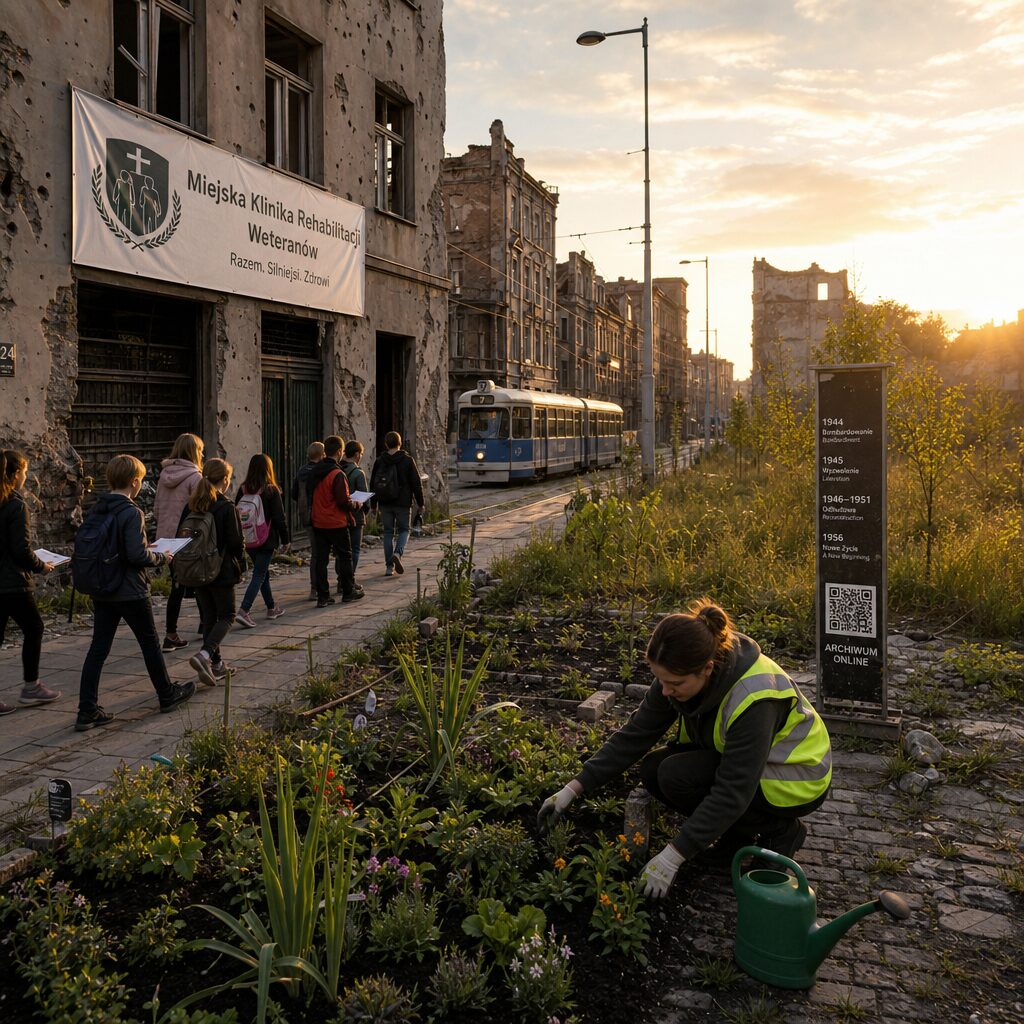
An Uncomfortable Premise: Why Look for Benefits?
Discussing benefits of war is delicate; it risks sounding like justification for violence. Yet history shows that large societal shocks — wars chief among them — have been engines of rapid change. This piece does not celebrate conflict. Instead, it asks a pragmatic question: when the unthinkable happens, what latent structures emerge that endure afterwards? Understanding these outcomes helps policymakers mitigate harm and harness constructive legacies without romanticising suffering.
Framing the inquiry this way also exposes an important democratic truth: societies learn from catastrophe. That learning often produces innovations and institutions whose long-term value persists well after the guns fall silent.
Technologies Forged in Fire: From Radar to the Web
Wars accelerate research in concentrated ways because urgency and funding align. Radar and jet engines, developed under pressure in the 1930s and 1940s, later transformed civil aviation and meteorology. Antibiotics like penicillin moved from lab curiosity to mass-produced life-saver because of wartime logistics and demand.
The digital era’s military lineage is well known but worth reframing: the internet’s early packet-switching work was intended to survive attacks and decentralise command. GPS, originally a Cold War navigation and targeting system, is now a backbone of global logistics, emergency response and everyday navigation. Cryptography advances born of military necessity underpin secure online banking and private communications. The ethical caveat remains: technical progress emerged from harm, but its civilian repurposing yields widespread public goods.
Administrative Statecraft: How Wars Made Modern Governments
Large-scale conflict forces states to build capacity rapidly: tax systems, bureaucracies, statistical agencies and logistical networks expand to sustain war efforts. Those same institutions are often redirected to peacetime tasks. The modern income tax, national statistical offices and conscript-driven public records contributed to more effective governance in many states.
These administrative legacies have a double edge. They enabled modern welfare states and public health systems in countries where wartime mobilisation demanded social cohesion. Yet they also made it easier for future governments to centralise control, which is why vigilance about democratic oversight is essential.
Societal Shifts: Gender, Labour and the Redistribution of Roles
When millions of men are mobilised, labour shortages push women and marginalised groups into roles previously barred to them. The Second World War’s impact on women’s employment, for example, altered gender norms and catalysed demands for rights and representation. Similarly, wartime economies opened vocational training and technical apprenticeships to a broader cross-section of society.
Post-conflict, these shifts can become permanent, accelerating social mobility and changing family structures. While progress was uneven and often contested, the disruption created openings for civil rights advances and redefinitions of citizenship.
Medical Advances and Rehabilitation: A Legacy of Care
Trauma creates urgency for medical innovation. Advances in reconstructive surgery, prosthetics, blood transfusion techniques and trauma medicine have roots in wartime medicine. The specialised disciplines of emergency medicine and rehabilitation medicine owe much to lessons learned on battlefields and in military hospitals.
Crucially, public recognition of veterans’ needs led to institutional supports — rehabilitation programmes, disability rights movements and research into mental health conditions such as PTSD. The social visibility of those needs expanded care standards for civilians too.
Memory, Law and International Order: Building Rules After Ruin
Out of cataclysmic conflict emerged new legal frameworks and international institutions designed to prevent recurrence. The Geneva Conventions, the UN system, and post-1945 human-rights architecture were reactions to wartime atrocities and governance collapse. While imperfect, these frameworks created shared norms and mechanisms for conflict resolution that did not exist at comparable scale before.
Trials and truth commissions, painful as they are, have also produced historical records that societies use to reckon with the past and craft reconciliation. Memory industries — museums, archives, oral-history projects — help anchor collective lessons and create civic rituals that discourage impunity.
None of this erases the moral cost of war. The point is analytical: the institutional and normative innovations that arose in its aftermath have had stabilising effects in many places, even as they remain contested and fragile.
Ecologies of Absence and Renewal
Paradoxically, regions depopulated by conflict sometimes undergo ecological recovery. Abandoned farmlands can revert to wetlands, forests reclaim battlefields, and biodiversity rebounds in zones spared industrial development. The Chernobyl exclusion zone offers a cautionary but instructive example: despite radiation, wildlife has flourished where human presence is limited.
These phenomena are not endorsements of abandonment or violence, but they demonstrate complex interactions between human conflict and environmental processes — and suggest that post-conflict land management offers opportunities for conservation and restoration if pursued deliberately.
Harnessing Legacies Without Glorifying Harm
If wars produce durable, sometimes beneficial legacies, the policy challenge is to capture those benefits without incentivising violence. That means investing in peacetime research and contingency planning, strengthening democratic oversight of expanded state capacities, and ensuring veterans’ care and technological advancements are guided by ethical frameworks.
Public discourse must acknowledge these hidden outcomes while centring the human cost. Only by confronting both can societies learn to build resilient institutions that reduce the likelihood of future conflict.