
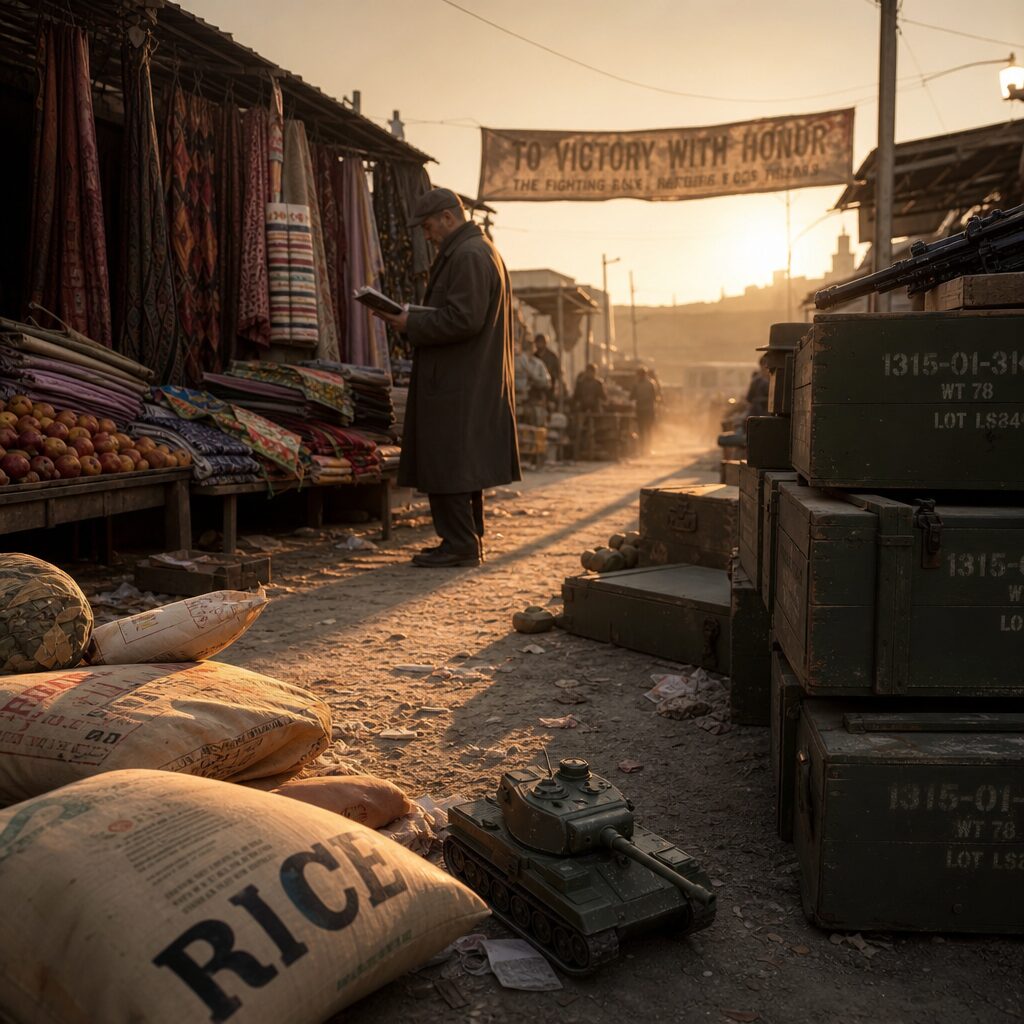
Market Day: Treating War Like a Purchase
Imagine a crowded bazaar where policies, hardware and narratives are laid out on stalls. That mental image is the dangerous starting point for many commentators, politicians and even procurement officers: treating war as an item to be ‘bought’ off the shelf rather than a human catastrophe to be endured and, if unavoidable, managed. When discourse frames conflict as a consumer choice, the first mistake occurs — normalising selection over sober restraint.
This section sets the scene. Framing war as a product invites metrics, marketing and competitive advantage into decisions about life and death. It skews priorities towards short-term benefits, brand loyalty to suppliers and glossy demonstrations rather than the ethical, legal and long-term human costs that should dominate deliberation.
Mistake 1: Buying the Shiniest Kit (and Ignoring Logistics)
The allure of the newest weapon system, the most advanced drone or the bestselling fighter jet is irresistible — like purchasing the latest smartphone. Yet the most common procurement error is prioritising capability theatre over sustainment reality.
A state or group may acquire high-end systems that require specialised maintenance, unique spare parts and complex supply chains. If logistics are not accounted for, that shiny kit becomes a museum piece within months. Avoidance starts with lifecycle thinking: calculate spare parts, training, transport, and maintenance before signing any contract. Ask whether you can realistically keep this system operational in austere conditions for years, not just run it for headlines.
Mistake 2: Confusing Brand Loyalty with Strategic Fit
Just as consumers stick to trusted brands, militaries and governments often fall into vendor lock-in — buying additional systems because they come from the same manufacturer rather than because they fit the mission. This reduces interoperability, inflates costs and narrows strategic options.
To avoid this, institute independent capability reviews and cross-vendor trials. Prioritise modularity and open standards so systems can interoperate and be upgraded without wholesale fleet replacement. Consider total cost of ownership, not just unit price or vendor charm.
Mistake 3: Trading Ethics for Efficiency
In markets where speed is prized, ethics can be sidelined. Governments may underwrite contracts with suppliers whose supply chains use forced labour, environmental degradation or opaque financing. Non-state actors may purchase weapons through illicit channels to skirt accountability. These short-term efficiencies carry legal, reputational and moral costs that can outlast the conflict itself.
Mitigation requires due diligence frameworks, end-use verification and transparent procurement. Civil society, parliamentary oversight and investigative journalism play essential roles in exposing malpractice. Buyers must embed human rights and environmental criteria into every tender, not treat them as optional extras.
Mistake 4: Shopping Without a Narrative Exit Strategy
People often ‘shop’ for war without planning how to stop shopping. Committing to an irreversible strategy — treaties signed, bases established, suppliers entrenched — makes de-escalation harder. There is a commercial inertia to conflict that benefits profiteers and punishes peacemakers.
Buyers should insist on exit and de-escalation clauses in agreements. Budget planning must include demobilisation, reconstruction and reconciliation costs. Think of peace as the final product: procurement decisions should be reversible or convertible to peacetime uses where possible.
Mistake 5: Underestimating the Power of Narrative Marketing
Wars are sold as much through imagery and slogans as through armaments. Governments and interest groups use marketing tactics to shape public consent — selective footage, catchy soundbites and emotive advertising. Consumers of information can be manipulated into supporting prolonged conflict.
Combat this by diversifying information sources, funding independent journalism and promoting media literacy. Scrutinise ads for policy change as you would a sales pitch; question whose profits or power would rise from prolonged engagement.
Mistake 6: Neglecting the Secondary Market — Secondhand Consequences
The secondhand arms market is booming: refurbished vehicles, surplus munitions and retired hardware find new buyers quickly. Appealing on price, these markets can be a minefield of obsolete safety standards, undocumented modifications and legal ambiguities.
Avoid hazards by demanding provenance, safety certifications and traceability. International frameworks such as export controls exist for a reason; use them. When possible, favour transparency over the lowest bid.
Mistake 7: Forgetting the Human Size and Fit
Too often procurement focuses on hardware; people are an afterthought. Weapons and systems are built for certain physiques, cultural contexts or literacy levels. Misfit equipment reduces effectiveness and increases harm to civilians and soldiers alike.
Include end-users in trials, adapt manuals to local languages and account for non-binary physical requirements. Training and human-centred design are investments that reduce accidents and build legitimacy.
A Shopper’s Checklist for Ethical and Effective Choices
Treat any decision about war like a high-stakes procurement with moral constraints. Before committing, run a checklist: lifecycle and logistics feasibility; interoperability and escape valves; human rights and environmental safeguards; exit planning and peacetime conversion; provenance and traceability; and human-centred fit and training.
Convene independent auditors, enable parliamentary and civil-society scrutiny, and insist on public reporting. These practices do not guarantee peace, but they prevent avoidable damage and keep accountability front and centre.
Conclusion: Buy Less, Buy Better, Be Wary of the Marketplace
If we persist in treating war as another product to consume, we normalise choices that favour short-term spectacle over long-term humanity. Better procurement is not merely technical; it is moral policy. The top mistakes people make when shopping for war — chasing the shiny, ignoring logistics, siding with brands, eliding ethics, and failing to plan exits — are avoidable with discipline, oversight and imagination.
The final lesson is simple: whatever you think you are purchasing, you are also buying consequences. Responsible buyers account for them before they pay.
Further Reading
For deeper perspectives on procurement, ethics and the secondhand arms trade, see SIPRI and investigative reporting such as the Guardian’s arms trade investigations. For procurement best practice, consult national defence acquisition guidelines and international export-control regimes.