
Introduction: A Strange Market
Demand for war sounds like a rhetorical provocation. Yet across boardrooms, social feeds and voting booths there is a discernible pull towards armed conflict — not merely as an accident of history, but as a demanded product with customers and suppliers. This piece unpacks that demand: why more actors, state and non-state, appear willing to pay for, provoke, or institutionalise violence in the mid-2020s. The focus is not moralising but mapping incentives, interests and emergent structures that treat war as something to be bought, sold or optimised.
Economic Incentives: How Capital Shapes Conflict
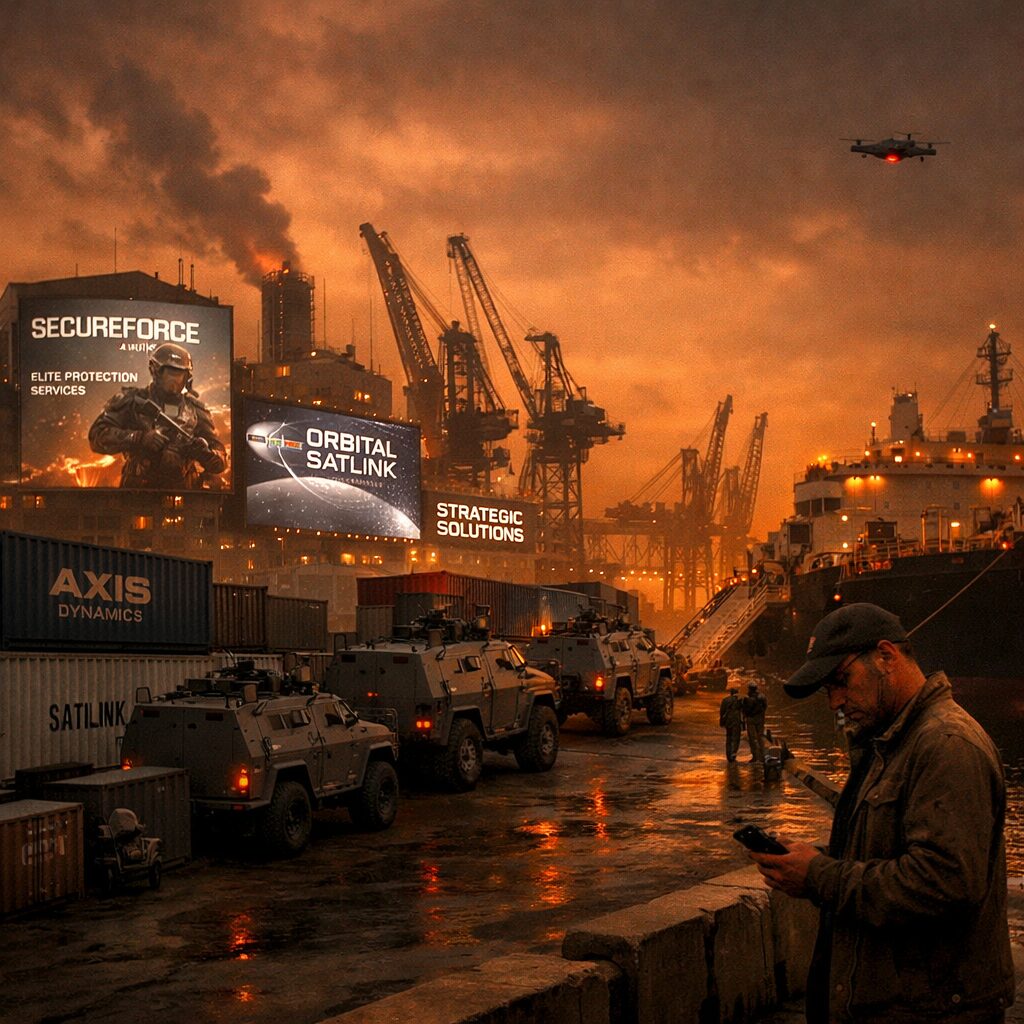
War has long been profitable for particular constituencies; what’s new is the scale and sophistication of the markets that now extract value from conflict. Defence contractors, private military companies and surveillance firms increasingly resemble tech firms — VC-funded start-ups offering subscription-style services, data products and integrated platforms. Their business models tie revenue to sustained instability: long-term contracts for border security, recurring software licences for targeting and logistics, and maintenance of weapon systems.
Meanwhile, natural-resource scarcity and sanctions regimes create economic rents that can only be realised through force or coercion. Agricultural output shocks, degraded supply chains and precious-minerals extraction in fragile states make peace a costly option for some stakeholders. Financialisation also plays a role: insurers, commodity traders and private equity funds adjust portfolios to capitalise on conflict-adjacent returns, subtly aligning investor incentives with higher geopolitical volatility.
Political Theatre and the Demand for Spectacle
In contemporary politics, war functions as theatre — an attention economy product that signals strength, resolves crises and consolidates identities. Authoritarian leaders use limited, high-visibility military actions to distract from economic pain and to rally domestic constituencies. Democracies are not immune: short, decisive interventions can be politically lucrative if framed as moral necessity. Media ecosystems that reward immediacy and spectacle amplify this dynamic. High-drama imagery, live-streamed strikes and viral narratives create demand for events that performatively resolve complex problems.
This is not always deliberate. Electoral cycles, social-media algorithms and a 24/7 news appetite combine to make military action disproportionately visible and therefore politically valuable. The result is a perverse feedback loop: political actors provide spectacle to satisfy media demand; media reward spectacle, and voters recalibrate expectations of leadership accordingly.
Technological Feedback Loops: Lowering the Cost, Raising the Appetite
Advances in autonomous systems, cyber tools and precision weapons have reduced the immediate human cost for some belligerents, making military action less politically risky and therefore more attractive. Drones, remote operations and plausible deniability in cyber operations form what might be called a ‘moral hazard of remoteness’ — the farther decision-makers are from physical harm, the easier it becomes to authorise force.
At the same time, dual-use technologies enable rapid escalation. Commercial satellite imagery, open-source intelligence and AI-driven targeting speed decision cycles while making operations more delegable to private contractors. This lowers the logistical and reputational barriers to entry for new actors, increasing the number of potential ‘customers’ for conflict as an instrument of policy.
Cultural and Psychological Drivers: Demand as Identity
War also answers psychological and cultural demands. In fractured societies, conflict offers narratives of belonging, revenge and heroism. Veterans’ cultures, militias and paramilitary groups provide social structures and economic opportunities in places where formal institutions have collapsed. For recruits, fighting can be a pathway to status, income or meaning.
Cultural commodification of conflict — from movies to videogames to social media — both normalises and aestheticises violence. That creates a feedback loop in which cultural demand for dramatic, valorised conflict shapes political and commercial offerings. The result is not universal enthusiasm for war but a market segmentation: specific demographics, industries and regions generate disproportionate demand.
Climate Stress, Migration and the New Scarcity Wars
Environmental change is transforming resource distributions and breeding low-intensity conflicts that are profitable to manage with militarised tools. Climate-driven migration pressures borders, while degraded arable land and water scarcity heighten competition. States and private actors respond with securitised solutions — walls, drones and contracts for migrant-management services — which create sustained military and paramilitary demand.
These are not always full-scale wars; they are hybrid contests where policing, surveillance and contract force replace open battlefields. The expansion of militarised responses to climate impacts institutionalises a market for conflict-management technologies and personnel.
Legal and Structural Enablers: Outsourcing Violence
The legal framework for outsourcing military functions has widened. Governments increasingly contract private companies for detention, logistics, training and direct combat roles. Legal ambiguity about accountability and jurisdiction enables a market where harm can be outsourced and reputation managed.
This regulatory opacity is a demand driver: it reduces political fallout for governments that wish to use force without formal declarations of war, and it creates profitable niches for firms that can operate in grey zones. Legal practitioners, insurers and lobbying groups become part of a broader ecosystem that sustains conflict demand by managing risk and normalising outsourced violence.
Information Economies: Propaganda as Product
Information manipulation has become a commodified service. Governments, parties and corporations purchase disinformation campaigns, influencer outreach and targeted narrative tools to build consent for conflict or to destabilise rivals. These services effectively create demand for kinetic or coercive responses: manufactured threats justify military spending; amplified grievances mobilise recruits; false flags can precipitate escalation.
Information economies make demand for war more elastic: a well-targeted narrative can convert public opinion rapidly, creating windows of opportunity for decision-makers to authorise force with comparatively low political cost.
Avenues for De-escalation: Reimagining Demand
If demand is what drives war, altering incentives can be a powerful lever for peace. Practical interventions include reconfiguring defence procurement to prioritise de-escalatory technologies, increasing transparency in contracting and financial flows, and building political norms that penalise spectacle-driven militarism. Climate adaptation investments that reduce resource competition and stronger legal regimes for private force can shrink markets for conflict.
Media literacy and regulation of attention economies can reduce the political reward for theatrical violence. Finally, economic development that offers alternatives to military labour — transitional employment for veterans and legitimate security-sector work — can change the supply-side calculus and, over time, soften demand.
Conclusion: Conflict as Choice, Not Fate
Understanding war through the lens of demand reframes it as an outcome produced by specific incentives, markets and cultural vectors rather than an inevitable recurrence. That perspective opens different policy levers: intervene in markets, reform incentives, and reshape narratives. The growing demand for war in the 2020s is not a metaphysical inevitability but a record of choices; altering those choices can bend history away from conflict.