
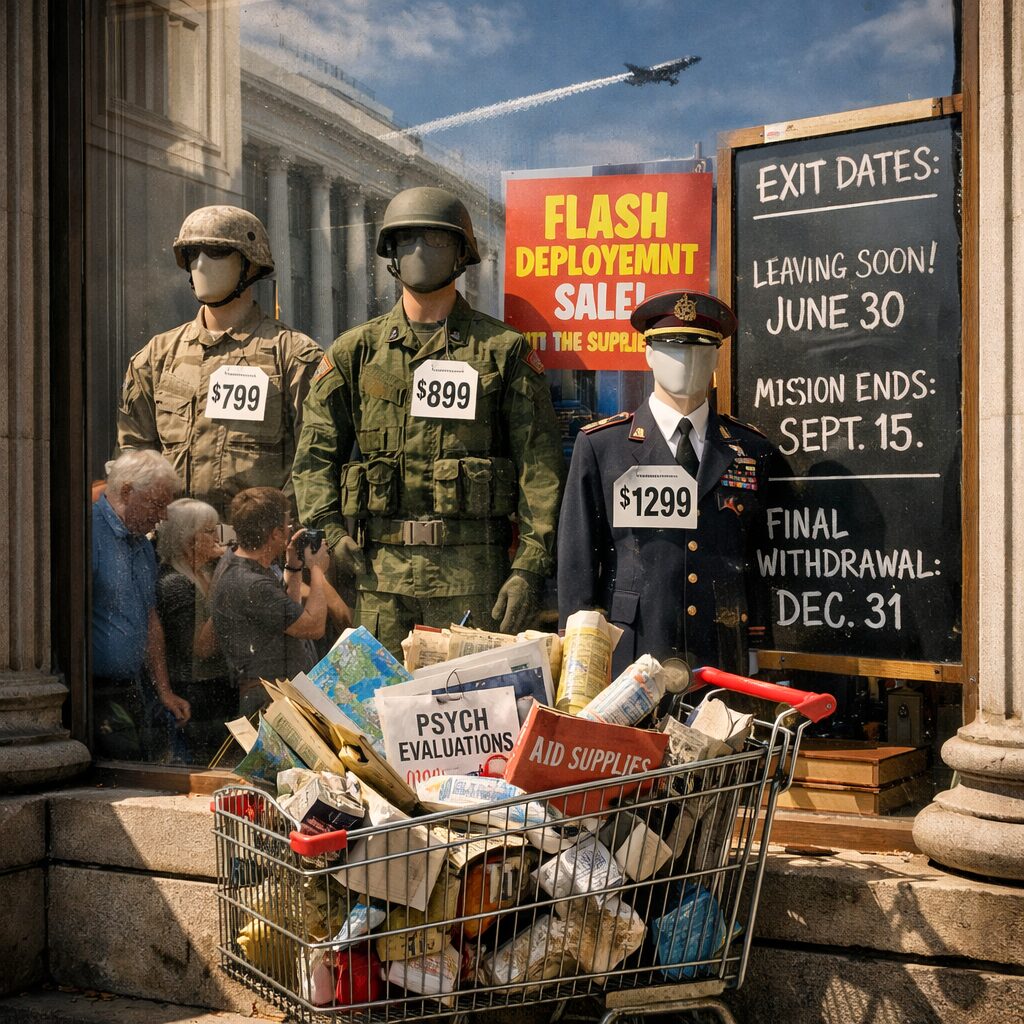
Introduction: When Conflict Is Sold Like a Commodity
Imagine a high-street shop window labelled WAR: glossy flyers flaunting quick wins, PR-friendly packaging, and a gleaming ‘best-seller’ tag on a doctrine that once cost lives. This is not a caricature: politicians, pundits and publics too often approach conflict as if it were something to be chosen from a catalogue. The consequences are rarely confined to the bargaining table. They ripple across societies, economies and generations.
This article treats that uncomfortable metaphor seriously. By reframing war-shopping as a series of consumer mistakes, we can expose the cognitive traps, institutional pressures and moral blindspots that push decision-makers towards catastrophic choices — and point to how to avoid them. The aim is not to trivialise suffering but to illuminate predictable errors and offer concrete corrective instincts for anyone involved in decisions that lead to or sustain armed conflict.
Mistake 1 — Buying on Price Alone: The Short-term Fiscal Fix
The cheapest option on offer is rarely the cheapest in the long run. Nations routinely select weapons systems, mercenary contracts, or surrogate partners based on immediate cost or visible headline metrics. What looks economical at procurement can be ruinously expensive through lifecycle maintenance, replacement, or political blowback.
Avoidance: Insist on total-cost-of-conflict accounting. That includes logistics, training, interoperability, legal exposure, reconstruction and the invisible costs of social trauma. Procurement panels should include economists and sociologists, not only engineers and tacticians, to broaden the horizon of what price means.
Mistake 2 — Treating Doctrine Like Fashion: Chasing the Latest Trend
Doctrines and tactics move through international communities like seasonal fashion. A triumphant case study or viral battlefield clip can make a tactic seem universally applicable. Decision-makers who copy an approach without assessing context risk deploying brilliantly inapt solutions.
Avoidance: Prioritise contextual translation over imitation. Establish ‘fit-for-purpose’ reviews that interrogate whether a tactic, technology or alliance suits geography, culture, political goals and legal frameworks. Reward adaptation and slow, critical learning rather than applause for novelty.
Mistake 3 — Purchasing Stories: The PR-Ready Conflict
War is as much narrative as ordinance. Too often, governments and militaries select operations that are easy to sell: limited missions with clear enemies and short timelines. These projects attract funding and public support because they fit tidy story arcs, not because they serve strategic objectives.
Avoidance: Demand narrative integrity. Media strategists, historians and ethicists should be part of planning teams to test whether the story being sold matches reality. Citizens and parliaments should require rigorous, ongoing disclosure rather than episodic, image-friendly briefings.
Mistake 4 — Neglecting Aftercare: Fatal to Assume a Self-healing Society
Shoppers don’t leave behind the packaging and hope for the best. Yet many states prepare meticulously for kinetic action and pay negligible attention to post-conflict reconstruction, justice or mental health. This neglect converts tactical victories into long-term instability.
Avoidance: Treat reconstruction as first-order warfare infrastructure. Budget and plan concurrently for reconciliation, public services, demobilisation and trauma care. Set legally binding transition benchmarks and fund independent monitors to prevent abandonment once headlines fade.
Mistake 5 — Loyalty to Brands and Individuals Over Institutional Health
Nations can become loyal to a general, an intelligence chief, a contractor or an allied power in ways that distort judgement. Personal chemistry and partisan politics create vendor lock-in: the same strategies are employed because the same personalities demand them, not because they are effective.
Avoidance: Build resilient institutions with rotating leadership, external audits and transparent contracting. Create incentives for dissenting analyses and whistleblowing. A culture that prizes reproducible processes over charismatic personalities is less likely to buy into catastrophic single-point failures.
Mistake 6 — Shopping Without an Exit Strategy
Finally, and most perilously, buyers often skip the final step: a credible, political, and logistical exit. Wars without exit clauses resemble open tabs that societies unexpectedly inherit. Planning for entry may be meticulous; planning for exit is treated as an embarrassingly pessimistic afterthought.
Avoidance: Insist that every strategic plan include a clear, phased exit strategy linked to measurable objectives. These exits should be negotiated with partners and local stakeholders, and written into legal frameworks when possible. Parliamentary or public approval processes should evaluate not only the reasons for intervention but also the plausibility and cost of withdrawal.
A Responsible Shopping List: How to Choose Wisely
If war must be chosen, approach the choice like a cautious buyer of high-stakes insurance.
– Apply full-spectrum accounting: budget for the long tail of costs.
– Test for contextual fit: ask whether the option suits geography, politics and law.
– Verify narratives: demand transparent, continuous reporting to align story and reality.
– Fund aftercare upfront: reconstruction and healing cannot be deferred.
– Strengthen institutions, not brands: decentralise decision authority and encourage critique.
– Design exit from the moment of entry: make withdrawal credible and conditional.
Treating these steps as non-negotiable filters will not eliminate the horrors of war, but it will reduce the likelihood of avoidable mistakes. In the marketplace of conflict, the cheapest, flashiest or most familiar option is often the deadliest. Better shopping, borne of humility and rigorous foresight, is a modest but essential safeguard for any society confronted with the terrible choice of going to war.