
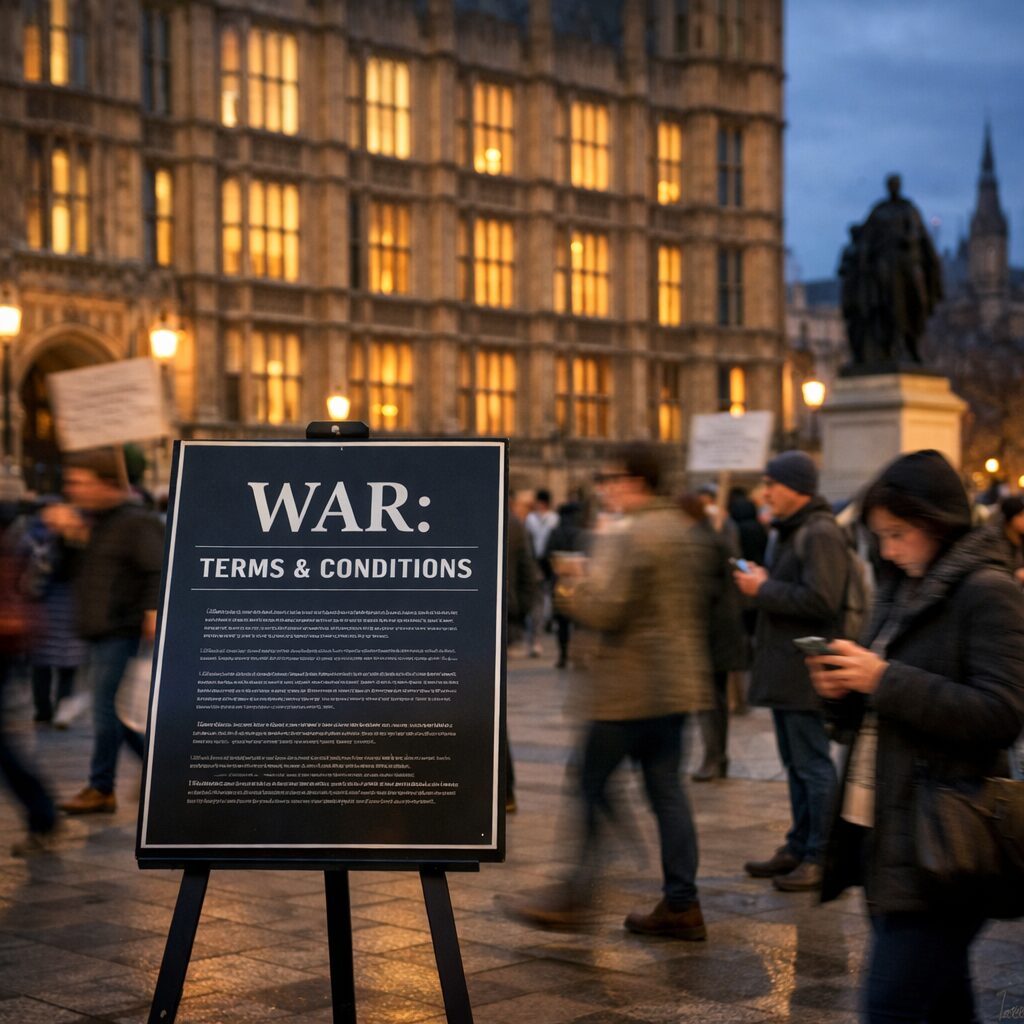
Introduction: Treating War Like a Purchase
Imagine walking into a dealership where the sales pitch for a war is polished, persuasive and oddly familiar: grand promises, glossed-over defects and a finance plan that looks attractive until you read the small print. This piece asks an uncomfortable but necessary question for citizens, politicians and influencers alike: if you are a first-time buyer of war — whether that means supporting, voting for, funding or otherwise endorsing military action — what should you know before signing on?
Framing war as a purchase is not a provocation for flippancy; it is a tool to clarify choices. Consumers research cars, mortgages and tech because they care about long-term cost, maintenance and resale. Applying the same consumer-oriented scrutiny to war helps reveal the practical, moral and civic obligations that are too often obscured by rhetoric and shorthand.
The Showroom: How Wars Are Marketed
Wars are sold using similar techniques to other big-ticket items: urgency, simplified narratives and appeals to identity. Politicians and pundits package complex geopolitical problems into digestible stories: a clear villain, a righteous goal, a promised timeline. This makes the proposition clickable and emotionally persuasive.
First-time buyers should recognise these marketing tactics. Look for who benefits from the sale — defence contractors, political actors, regional allies — and which costs are being omitted. ‘National security’ is a valuable label, but it should not be a blank cheque. Demand transparent comparisons: what are non-military alternatives, and what evidence supports claims of necessity and proportionality?
The Contract: Legal, Ethical and Parliamentary Terms
Every serious purchase has a contract. For war, this contract is made up of legal statutes, international law, parliamentary approvals and unwritten agreements. Know the clauses: under what legal authority is the action justified? Has parliament or the appropriate legislative body been properly informed and allowed to vote?
Ethical terms matter too. Is there a clear, coherent objective? What measures are in place to minimise civilian harm and uphold human rights? First-time buyers should insist on rigorous legal opinions, transparent rules of engagement and publicly available criteria for success and failure. Without these, the ‘contract’ is unenforceable and morally dubious.
The Hidden Costs: Budgeting Beyond the Headlines
The sticker price for a conflict is rarely the true price. Immediate defence spending is only the visible part. Hidden and long-term costs include reconstruction, refugee flows, economic dislocation, interest on wartime borrowing, veterans’ healthcare and intergenerational trauma.
Accountants of war must include these liabilities in any cost–benefit analysis. First-time buyers should ask for independent fiscal estimates over decades, not just immediate budgetary figures. Evaluate opportunity costs: what domestic priorities will be deferred or deprioritised because of war spending?
Maintenance and Upkeep: The Long Tail of Conflict
Like any complex asset, war requires ongoing maintenance — surveillance, occupation forces, peacekeeping, training local forces and continuous diplomatic efforts. These are not short-term projects; they can last for generations.
Assess whether there is a sustainable plan for this maintenance. Who will fund it? Who will lead it? Is there a transparent timeline and criteria for scaling down? First-time buyers should be wary of campaigns promising swift, decisive action without a credible plan for the drawn-out aftermath.
Exit Strategies and Resale Value
One of the clearest signs of responsible purchasing is a credible exit strategy. In war, exit means setting metrics for withdrawal, plans for handing authority to local institutions and safeguards against power vacuums. Without these, interventions often ossify into open-ended commitments.
Resale value is a metaphor for what remains after the conflict: functioning institutions, stable markets, civil society and reconciliation mechanisms. First-time buyers ought to demand measurable benchmarks for these outcomes before engaging, and a public audit after any withdrawal to assess what was actually achieved.
Aftercare: Caring for Veterans and Civilians
Post-conflict care is often underfunded and politically unpopular, yet it is essential. Veterans face physical and mental health challenges, families bear social costs, and civilian communities need reconstruction and reconciliation. These are moral responsibilities that persist long after headlines fade.
First-time buyers must factor aftercare into their calculations: ring-fence budgets for healthcare, social support and community rebuilding. Support independent commissions to monitor implementation, and ensure survivors’ voices shape policy for redress and healing.
Warranty and Accountability: Who Pays When Things Go Wrong?
Big purchases usually come with warranties and returns policies. War comes with none. When strategies fail, who is held accountable? Political leaders? Military commanders? Contractors? Clear mechanisms for review, accountability and remedy are essential to prevent impunity.
Insist on statutory reviews, independent inquiries and enforceable accountability measures. First-time buyers should demand that decision-makers remain publicly accountable for the outcomes and costs of their choices, including legal consequences where laws are broken.
A Practical Checklist for First-Time Buyers
Before you support a war, pause and run through this checklist:
– Who is selling the war and why?
– What are the clearly stated objectives, and how will success be measured?
– What legal authorisation exists, and has proper parliamentary scrutiny occurred?
– What are the short-term and long-term financial costs, including indirect liabilities?
– Is there a plausible maintenance plan and exit strategy?
– What provisions exist for veterans, civilians and reconstruction?
– What accountability mechanisms will apply if the venture goes wrong?
If the answers are absent, vague or overly optimistic, treat the offer with scepticism. Buying into war without this due diligence is to accept an open-ended liability with real human consequences.
Conclusion: Choosing with Eyes Wide Open
Framing war as a purchase is not to trivialise suffering; it is to insist on responsibility. First-time buyers — citizens, voters, activists — have a duty to demand full disclosure, credible plans and binding accountability. The stakes are moral, political and fiscal. Choosing war should never be an impulse buy.
If societies approached decisions about conflict with the same rigor they apply to major financial commitments, policy would be more cautious, humane and accountable. That is the minimal standard democracy deserves.