
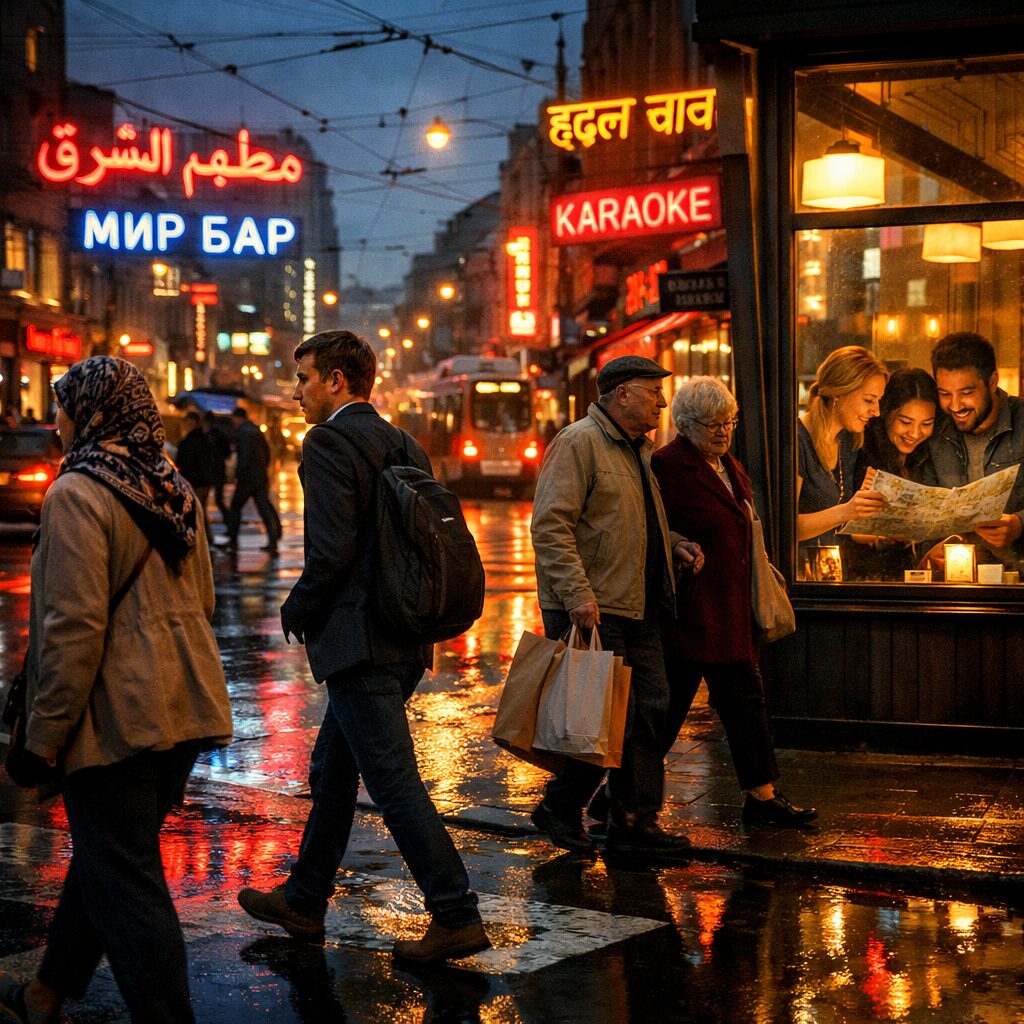
A Quiet Magnetism: Why ‘International’ Feels Irresistible
There is a peculiar psychological tug in the word “international” — a subtle promise of possibility that goes beyond geography. It telegraphs movement, access and an imagined life that is textured with multiple languages, cuisines and codes. For many people, the allure is not simply about crossing borders; it’s about stepping into an identity that feels cosmopolitan, capacious and future-facing.
At a basic level, “international” operates as a status signal. It suggests education, mobility and curiosity, a shorthand that communicates cultural capital without needing to spell it out. But beneath signalling lies an emotional architecture: the sense of adventure it triggers, the cognitive pleasure of novelty, and the social reassurance of belonging to a broader, transnational community.
Neuroaesthetics of the New: How Novelty Lights the Brain
Neuroscience shows that novelty activates dopamine circuits tied to reward and learning. Encountering the unfamiliar — a foreign accent, an unfamiliar culinary spice, or a city skyline from a different hemisphere — lightens attention and enhances memory. The international, as a category, functions like calibrated novelty: not chaotic, but affordably new.
This is why people binge foreign dramas, collect passports’ worth of stamps, or subscribe to newsletters that promise global discoveries. The brain’s appetite for novelty is satisfied while prediction error is kept within tolerable bounds. In other words, ‘international’ provides the optimal surprise: stimulating but safe enough to integrate into existing identity schemas.
Transnational Identity as Emotional Insurance
In uncertain times, internationalism can feel like a psychological hedge. When local institutions falter — economies wobble, political climates polarise — affiliation with an international community offers resilience. It is emotional insurance: routes for exit and entry, social networks that cross borders, and a sense that one’s life is not beholden to a single polity.
This hedging is not merely pragmatic. People derive comfort from imagining alternative futures. The idea that you could live, work or be welcomed elsewhere softens the sting of local instability and bolsters self-efficacy. For diasporas, the effect is two-fold: a tether to home and a buoy of possibilities abroad, each feeding a narrative of continuity rather than rupture.
The Social Mirror: Internationalism and Status Performance
Performing an international persona — through language choice, travel photos, or culinary omnivorousness — is a way of signalling openness and modernity. Yet this performance is complex: it can be sincere curiosity, aspirational branding, or a mixture of both. The psychology here borrows from signalling theory: visible markers (a foreign degree, multilingual fluency) credibly communicate competencies valued in global markets.
Importantly, audiences read these signals against local norms. In some contexts, internationalism is admired as cosmopolitan sophistication; in others, it provokes suspicion as elitism. The behaviour of signalling is therefore calibrated: people emphasise certain international elements that will resonate positively within their specific social circles.
Algorithms, Curated Cosmopolitanism and the Illusion of Mobility
Technology has industrialised the taste for the international. Feeds and recommendation engines curate snippets of distant cultures, creating a sense of global acquaintance without the logistical costs of travel. This curated cosmopolitanism satisfies a critical psychological need — connection to the wider world — while often leaving the deeper experiences untouched.
The danger is an illusion of mobility: feeling globally engaged while remaining territorially stationary. Psychologically, this can yield both contentment and dissonance. The curated international comforts the desire for novelty and status, but without the friction that fosters humility and sustained intercultural learning. Awareness of this trade-off can help individuals seek richer, more reciprocal cross-border engagements when they want them.
Practical Implications: Designing Experiences That Honour the Why
Understanding the psychology of international attraction suggests pathways for policy-makers, educators and businesses. Offer structured novelty that supports learning rather than spectacle. Build transnational programmes that emphasise mutual exchange rather than one-way consumption. Design digital encounters that move beyond surface-level curation to foster sustained relationships.
When we design with the psychological drivers in mind — reward, identity, safety and signalling — international experiences become not just alluring but genuinely transformative. They can satisfy our appetite for novelty while deepening empathy, resilience and global citizenship.
Conclusion: The Paradox of Belonging and Distance
The draw of the international is a mix of appetite for the new and a yearning for security beyond the local. It promises expanded horizons and functions as both identity project and safety net. Yet its most productive incarnation happens when novelty is paired with responsibility: when international engagement becomes a pathway to sustained, reciprocal relationships rather than a mere badge.
In a world where borders remain politically fraught, the psychological mechanics of why people are drawn to the international will continue to shape culture, markets and policy. Recognising the motives behind that draw — and designing experiences that honour them — offers a route to making internationalism more inclusive, honest and durable.